
 Article
 19.05.2026
За матеріалами онлайн-семінару «Офтальмологічна школа для лікарів. Офтальмологічні катастрофи»
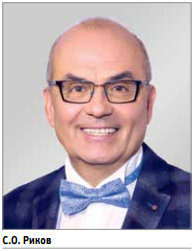
An event of interest to the Ukrainian ophthalmological community took place in late September. At the initiative of the NGO “Association of Pediatric Ophthalmologists and Optometrists of Ukraine,” a seminar titled “Ophthalmology School for Physicians. Ophthalmological Catastrophes,” during which leading domestic specialists presented new scientific data on the prevention and treatment of ophthalmic pathologies. Corresponding Member of the National Academy of Medical Sciences of Ukraine, Chairman of the Board of the NGO “Association of Pediatric Ophthalmologists and Optometrists of Ukraine,” Head of the Department of Ophthalmology and Optometry in Postgraduate Education at the Institute of Postgraduate Education of the Bogomolets National Medical University (Kyiv), Doctor of Medical Sciences, Professor Serhiy Oleksandrovych Rykov.
According to the definition from the Tear Film and Ocular Surface Dry Eye Workshop II, DSE is a multifactorial disease of the ocular surface characterized by a loss of tear film (TF) homeostasis and accompanied by ocular symptoms in which TF instability and hyperosmolarity, inflammation and damage to the ocular surface, and neurosensory abnormalities play an etiological role.
The prevalence of SSO ranges from 5% to 70%. The most common form is SSO with excessive tear evaporation, which is more common in women than in men, and its symptoms worsen with age.
Lysozyme is used as a marker of lacrimal gland function: changes in its levels may indicate a disruption in the integrity of the tear film. The content of immunoglobulins synthesized by plasma cells is also important: secretory IgA is the primary immunoglobulin in the tear film, while IgG and IgE are present in lower concentrations.
Factors associated with SSO include medications, specifically:
The development of SSO is also influenced by diseases and external factors:
The speaker specifically addressed the most common cause of CSC—computer work. In particular, the following factors worsen the condition of the eye’s surface:
CSD may be associated with:
Symptoms of dry eye include:
CS in children is more commonly referred to as computer vision syndrome. However, if a child has rheumatoid arthritis, congenital glaucoma, diabetes, or chronic recurrent uveitis, CS may be associated with these conditions.
Additionally, 100% of children who wear contact lenses have SSO. Subjective symptoms depend on age: in children aged 3–6 years, symptoms are present in only 14.3% of cases, while in those aged 12–18 years, they are present in 89%. The primary mechanism underlying the development of dry eye in children involves a disruption of the tear film despite normal tear production.
The professor noted that the development of DSE is also associated with refractive surgery, which is one of the most common elective surgeries in the world. The causes of dry eye syndrome following this procedure include trauma to the corneal epithelium, transection and denervation of the corneal nerves, an increase in pro-inflammatory factors, and the use of eye drops (which leads to a decrease in goblet cell density).
Regarding diagnosis, the speaker noted that there is no “gold standard” among the symptoms and signs for establishing a diagnosis of SSO. Initial diagnosis is based on the patient’s medical history and complaints.
To diagnose SSO, it is recommended to assess tear stability using a slit lamp after instillation of sodium fluorescein or with a keratograph. The test determines the tear film break-up time—the interval between a full blink and the appearance of the first tear film break. If it is less than 10 seconds, SSO may be present.
During keratography in the context of SSO, the following must be performed:
During the fluorescein test, the condition of the cornea should also be assessed 1–3 minutes after instillation. If there are more than 5 stained spots on the cornea, this is a sign of SCO.
The lissamine green test allows for the assessment of lesions on the eyelid margins and conjunctiva. A result is considered positive if there are more than 9 spots. If staining extends more than 2 mm in length and covers more than 25% of the sagittal section, it may indicate eyelid margin epitheliopathy.
It is also important to assess the eyelids for the presence of blepharitis, demodex, and eyelid margin epitheliopathy. The condition of the meibomian glands, eyelid adhesion, and complete eyelid closure are also evaluated.
Additional examinations are recommended to detect concomitant eye fatigue: visometry, skiascopy, and determination of absolute accommodation and relative accommodation reserve.
At the start of treatment, it is necessary to clearly convey information to the patient about their condition and the treatment plan. All patients with SSO are advised to follow visual hygiene guidelines, which include:
An important part of therapy is identifying and eliminating (if possible) triggers of DSC; prescribing artificial tears (AT) and eyelid hygiene products; and prescribing omega-3 fatty acids.
In cases of severe DSC, the following are recommended:
In cases of severe DAC, the following methods may be added to therapy:
Symptoms of SSO begin to subside with the use of eye drops four times a day for a month, but the overall condition improves only after several months of regular use.
S.O. Rykov discussed in detail certain patterns regarding the composition, use, and efficacy of the drops:
Regarding the use of omega-3 fatty acids, Serhiy Oleksandrovych noted that their primary effect in DSC is to reduce eyelid inflammation and improve the function of the meibomian glands. A number of studies have documented statistically and clinically significant changes, primarily in older patients.
The most modern treatment method for DAC is intense pulsed light therapy. This method has proven highly effective for meibomian gland dysfunction. In 87% of patients, tear film break-up time improves, and 93% report a subjective improvement in DAC symptoms. The procedure is safe, with the only side effect being temporary redness and swelling of the eyelids. However, it should be noted that achieving a long-term effect with this method is difficult, and symptoms usually return after about 9 months.
An available treatment is autologous serum—eye drops made from the patient’s own blood. It differs from platelet-rich plasma (PRP) in that it contains natural growth factors and proteins. It may improve corneal healing and nerve regeneration.
Addressing the issue of eye fatigue, the speaker noted that it is always observed in the context of computer vision syndrome. The symptoms of asthenopia include:
SSO is a component of asthenopia, so the aforementioned treatment methods are also important for alleviating the patient’s condition.
The professor paid special attention to Gilays eye drops—a product that meets global recommendations. It contains a high concentration of high-molecular-weight hyaluronic acid (0.4%) and is preservative-free. Thanks to the mucomimetic, mucoadhesive, and viscoelastic properties of hyaluronic acid, Gilays improves the stability of the tear film and ensures comfort for the ocular surface—lubricating, moisturizing, and protecting it.
Gilaise and Gilaise Kea are ideal natural lubricants with high rheological properties that:
Features of Gilays Kea Ophthalmic Isotonic Ointment:
For antioxidant protection of the retina, Optix Premium may be recommended; it has a scientifically validated formula, contains the European-grade ingredient lutein, and is manufactured using modern technologies. This product positively affects visual acuity and reliably protects the retina. Optix Premium contains anti-inflammatory ingredients, exerts a neuroprotective effect, and prevents the progression of age-related eye diseases. Recommended at 1 capsule per day for 2–3 months in the following cases:
Prepared by Olena Kostyuk